St. George's islet
and St. Helen
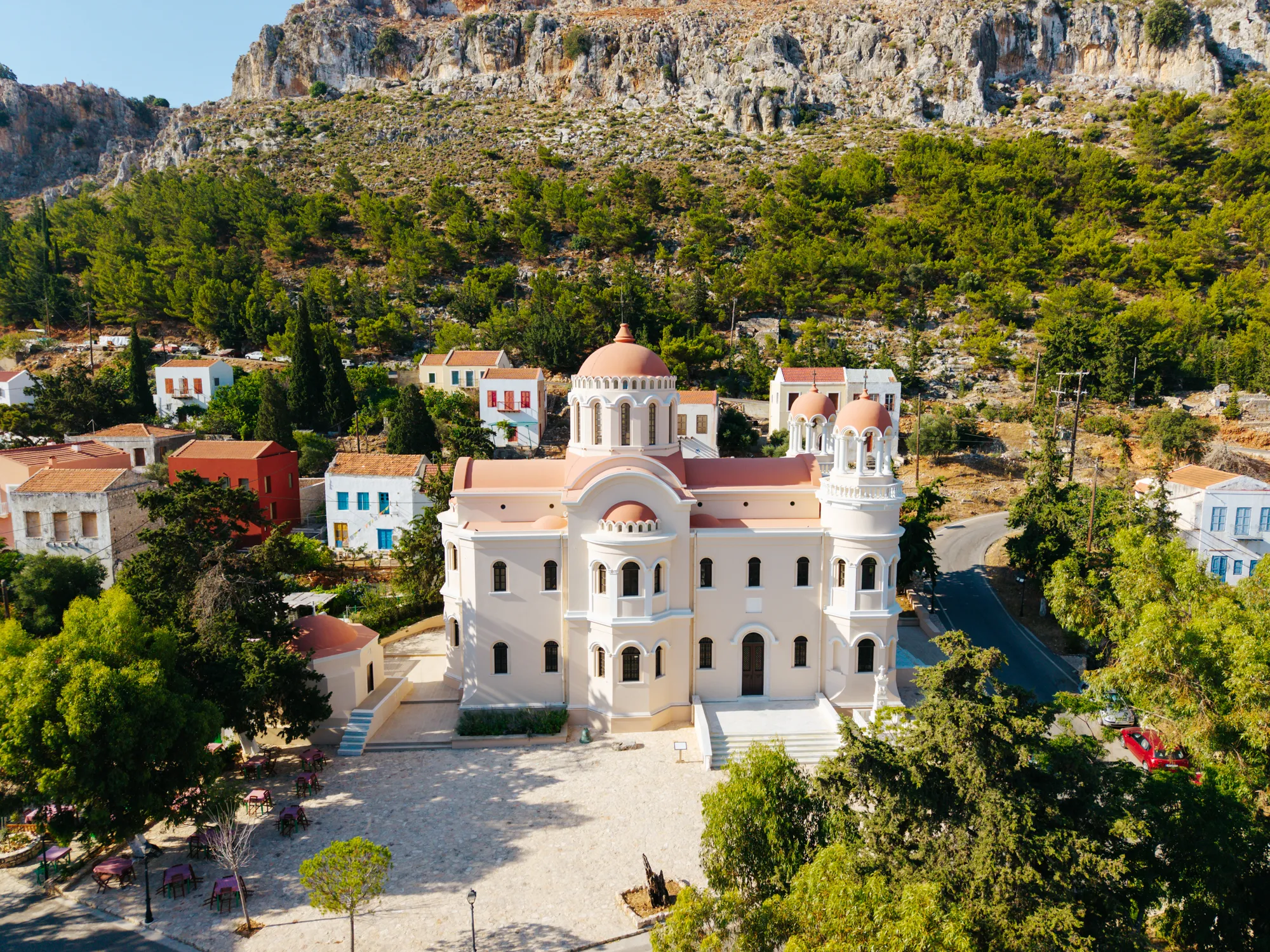
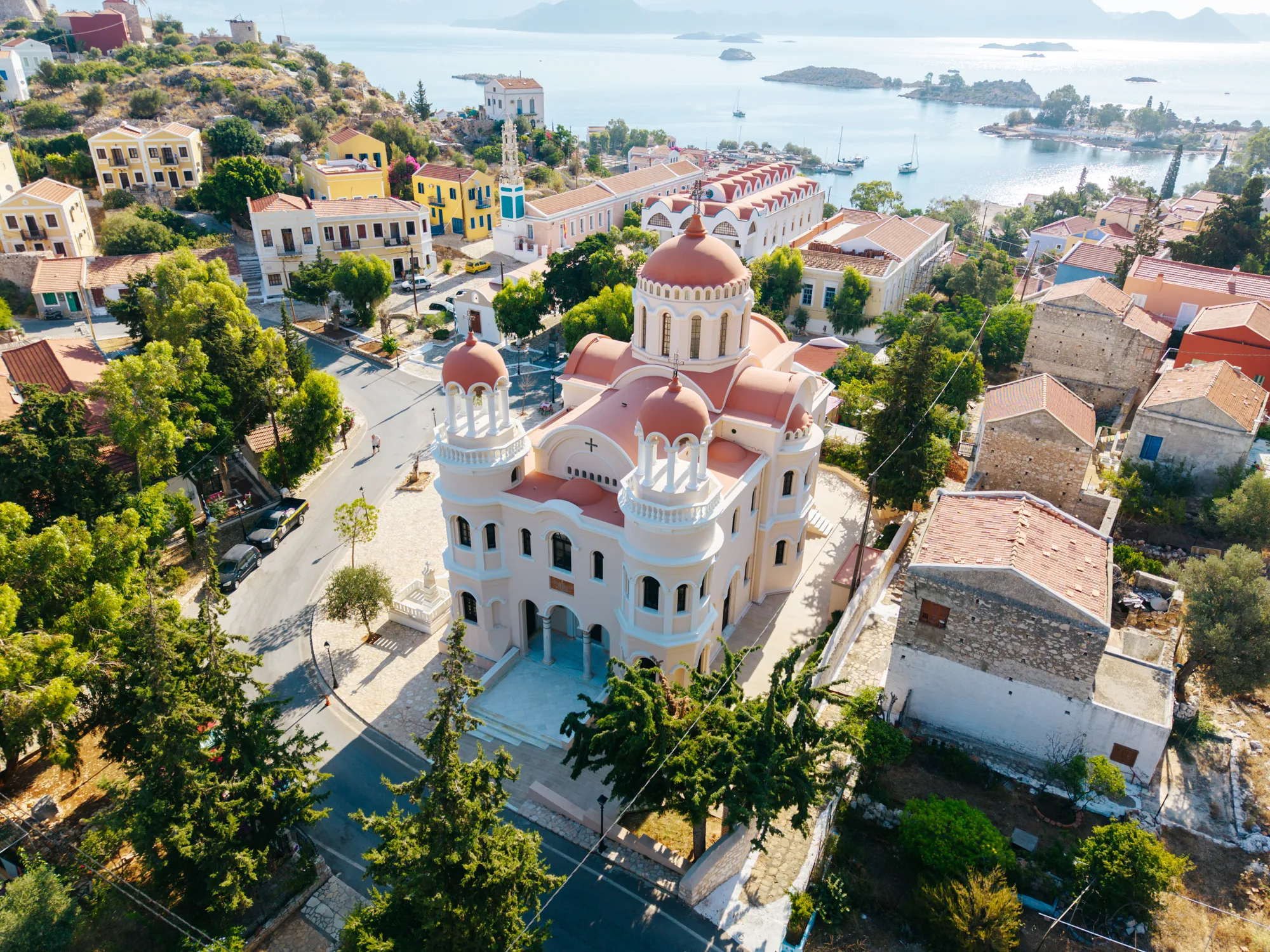
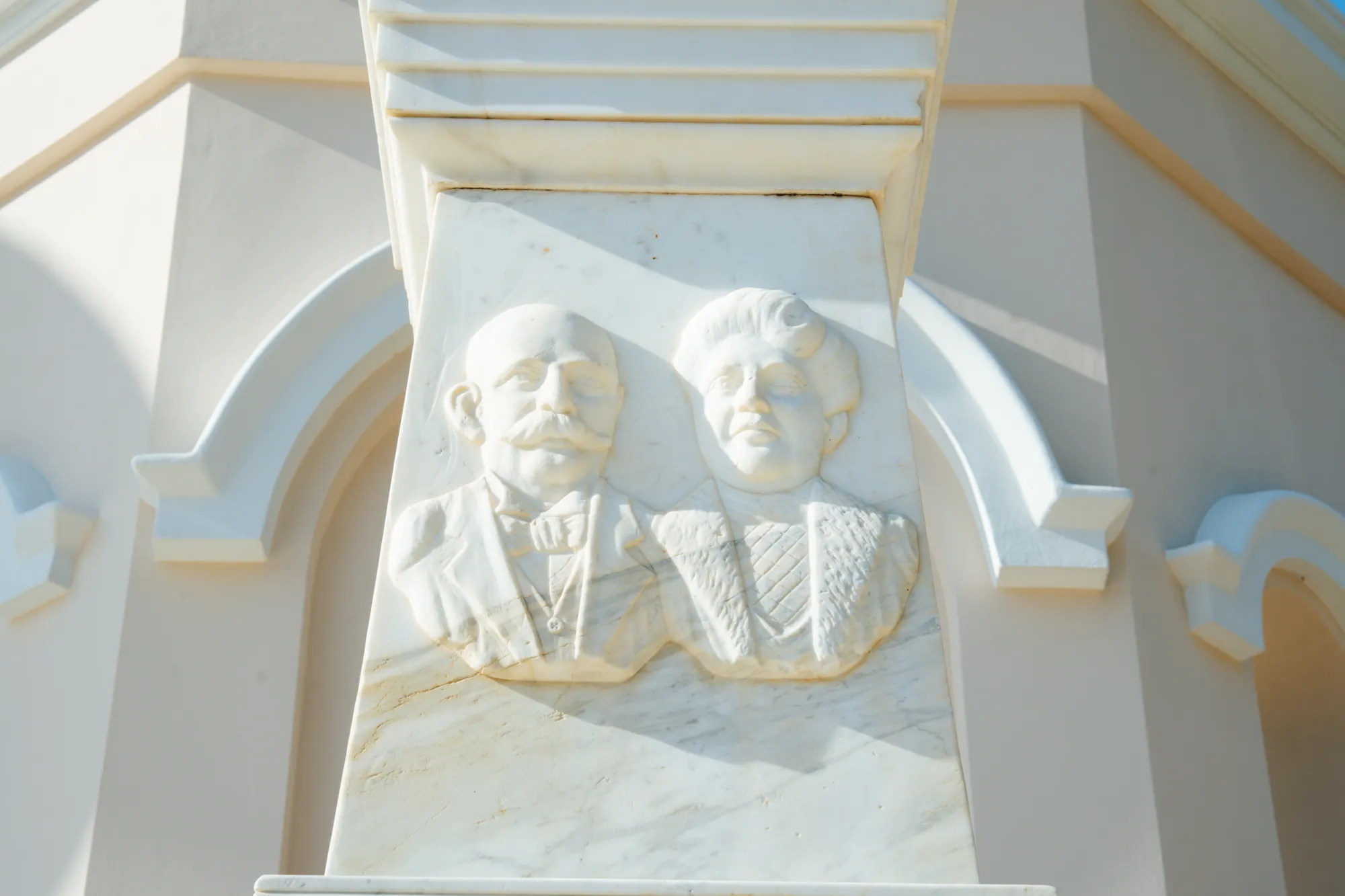
The church was founded on the site of an earlier 17th-century church dedicated to St. George, which was demolished in 1902. The architect is believed to have been Panos Diakostamatis from Samos. Construction halted after 1911, following the death of its benefactor, and the building remained incomplete for many years. In 1994, it was officially designated as a historic preserved monument by the Ministry of Culture.
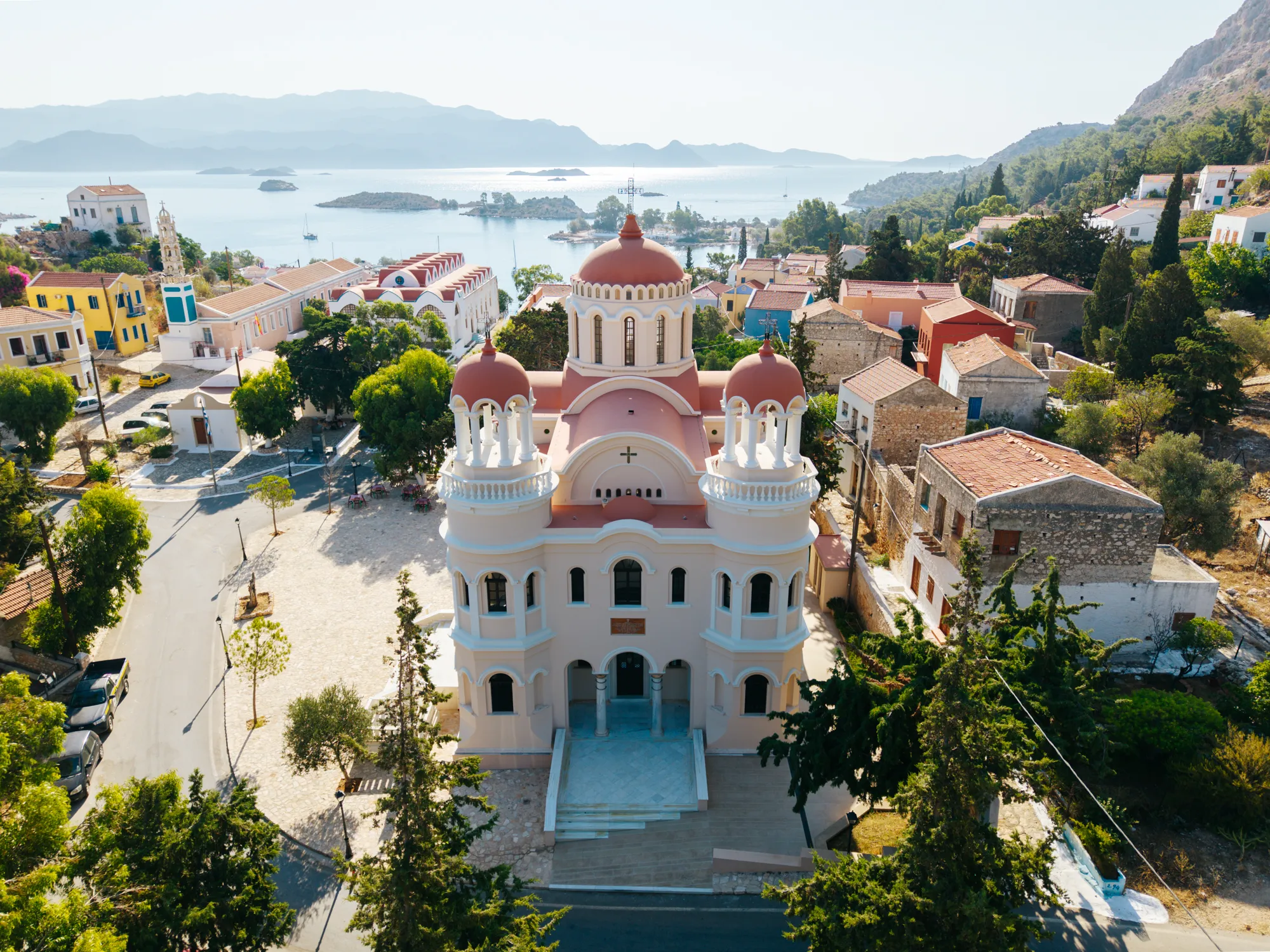
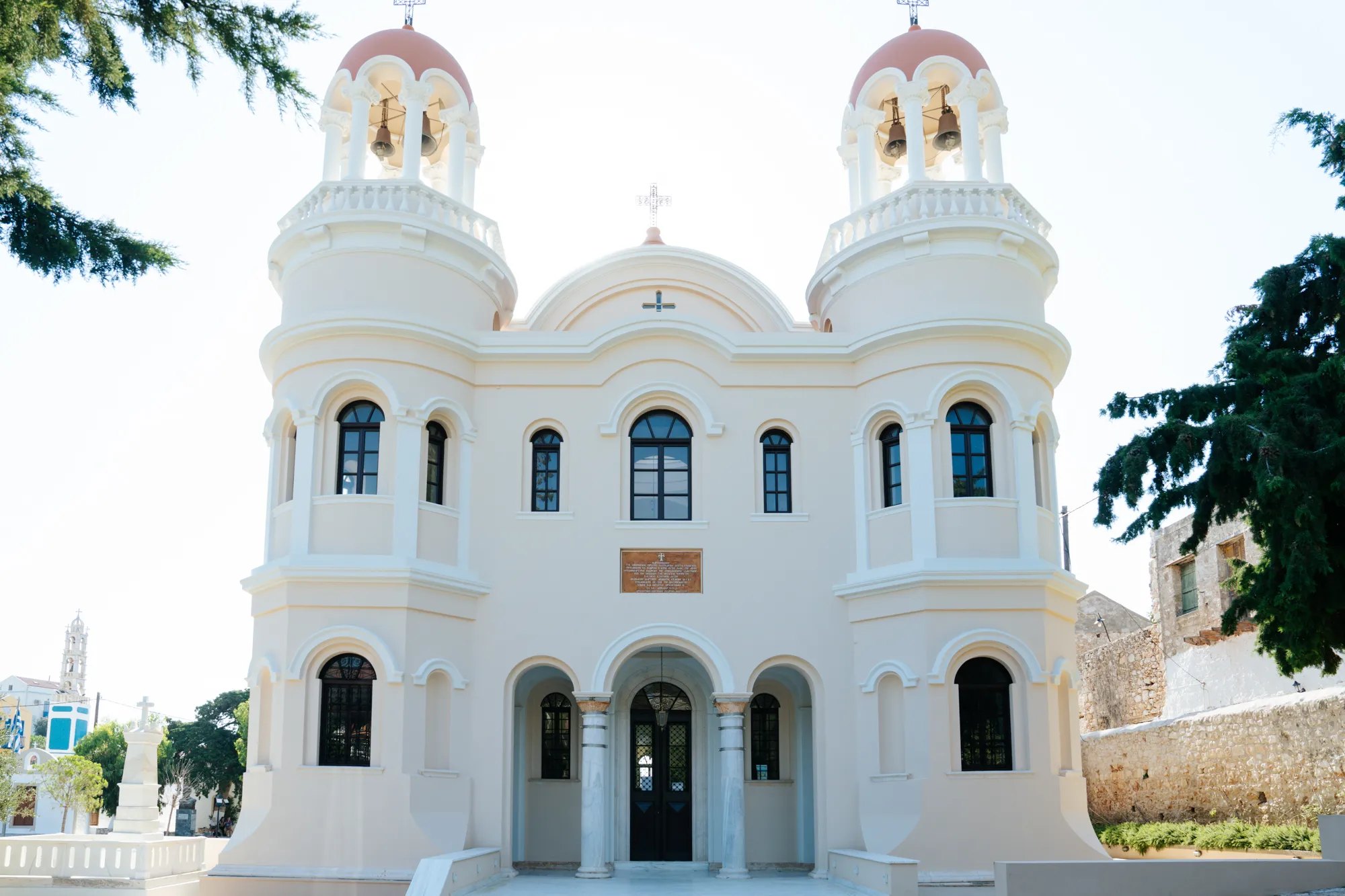
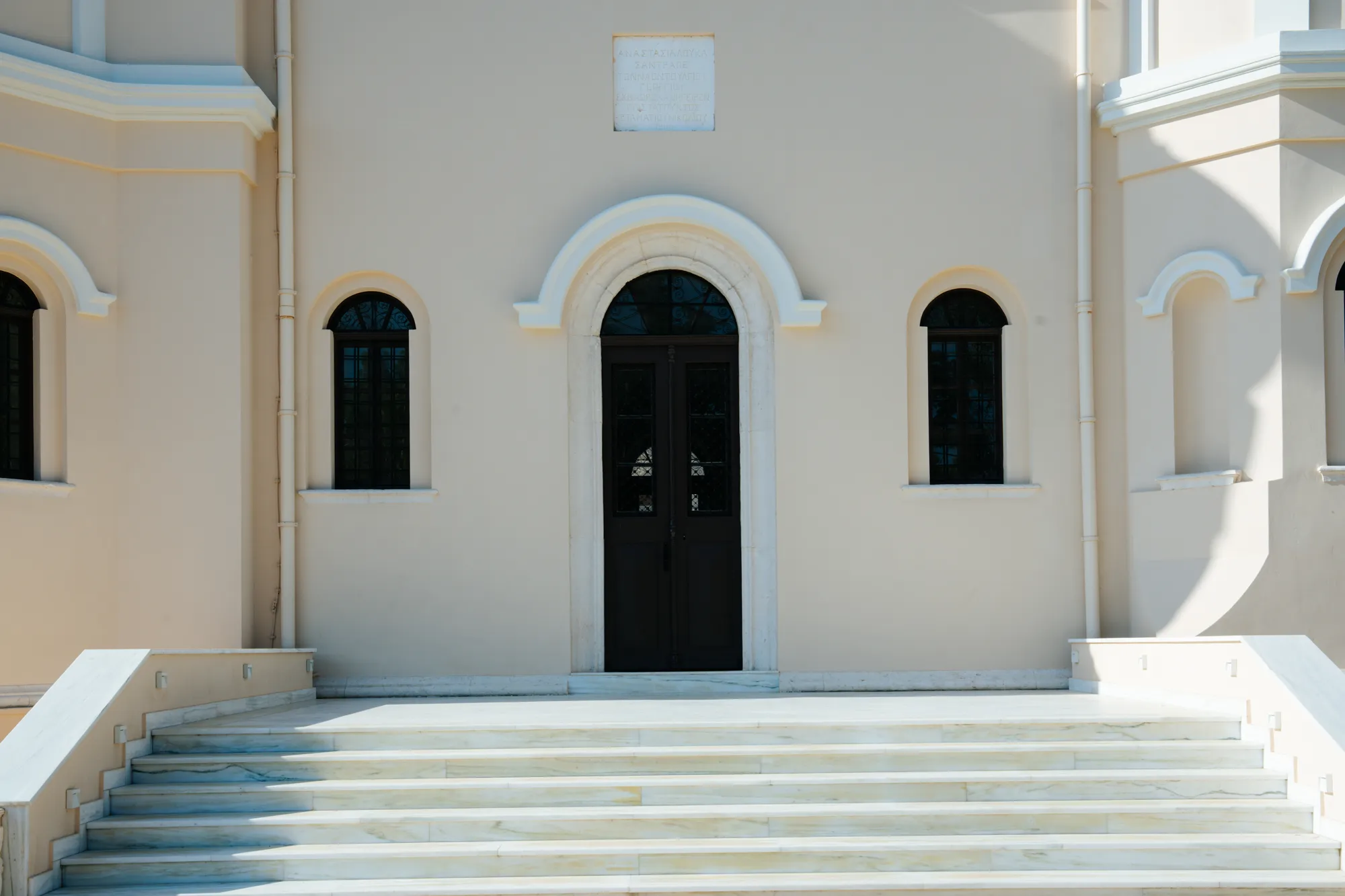
This imposing structure belongs to the type of a composite, four-column, cross-in-square domed church and is a characteristic example of late Greek-Byzantine architectural revival of the 19th and early 20th centuries. Its scale is impressive (25.4m x 15.8m, with a height of approximately 20.5m).
The interior surfaces are fully plastered using traditional techniques that imitate marble cladding. The iconostasis is built-in, while the marble pulpit and bishop’s throne were crafted in workshops of Smyrna in the early 20th century. Inside the dome, a rare depiction of Christ Pantocrator—known as the “Ancient of Days”—can be seen.
Restoration and enhancement works began in 2020 and were completed in 2023, supported by NGO Aegeas, founded by Athanassios and Marina Martinos. These included structural reinforcement, roof reconstruction, rebuilding of the bell towers, conservation of original plasters and decorative elements, installation of new marble flooring, and full restoration of all marble features and icons.
The surrounding area was also redesigned, with marble paving, improved access, and architectural lighting that highlights both the church and the square. Additional works included the renovation of the ossuary and the restoration of the cenotaph.